The wick is the smallest part of a candle and the one that decides how it burns. It sets the size of the flame, the width of the pool, the speed of the burn and whether there is soot on the glaze. Two minutes of attention before each burn makes more difference than anything else you can do.
What the wick actually does
A wick is a fuel line. The flame melts the wax around it; the liquid wax climbs the braid, the way water climbs a strip of kitchen paper; near the top it turns to vapour, and the vapour is what burns.
Ours are flat-braided unbleached cotton, sized to each vessel and burn-tested over twelve four-hour burns. A flat braid bends a little as it burns, so its tip curls into the hottest part of the flame and partly burns away. That helps. It does not replace trimming.
Why 5 mm
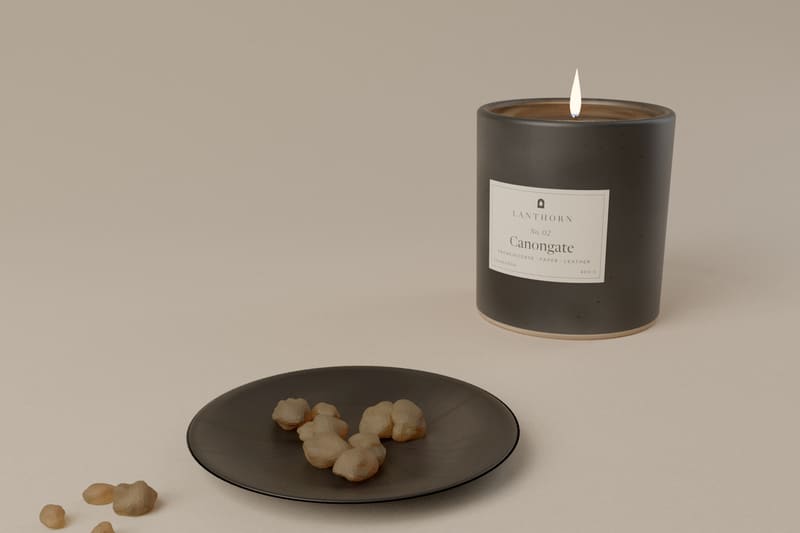
The length of the wick above the wax sets how much fuel it can draw up. At about 5 mm (¼ in), a flame on our candles is small, still and teardrop-shaped, and it melts the pool at the rate the vessel was designed for.
A longer wick draws up more wax than the flame can burn completely. The flame grows, flickers, smokes and burns through the candle faster. A wick much shorter than 5 mm can’t lift enough fuel, so the flame shrinks and the pool drowns it.
To trim:
- Wait until the candle is cold and the wax has set. Never trim a lit wick.
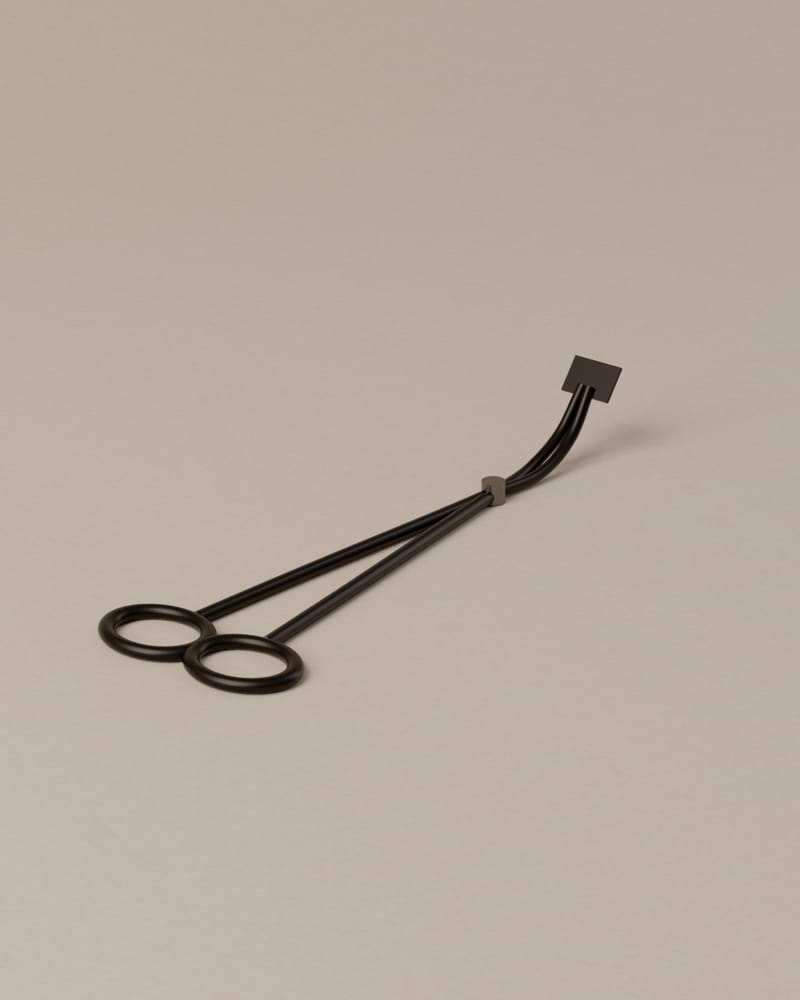
- Cut the wick to about 5 mm (¼ in). Our wick trimmer has an angled jaw that reaches the bottom of a 400 g vessel and a flat foot that holds on to the trimmed end.
- Drop the trimming in the bin, not into the wax. A scrap of wick or a spent match left in the wax can catch and act as a second wick.
Mushrooming
A mushroom is the small knob of carbon that builds up on the tip of a wick. It forms when the wick carries more fuel than the flame can burn, usually because it is too long, has burned for too long or sits in a draught.
A mushroomed wick makes a larger, smokier flame, and bits of carbon can drop into the pool. Put the candle out, let it set, then trim below the carbon, back to 5 mm. If you see mushrooms after every burn, check how long your burns are: 4 hours is the most any candle should burn at a time.
Soot
Soot is unburned carbon: a thin thread of black smoke above the flame, and a grey ring on the inside of the rim. It nearly always comes from one of three things:
- a wick longer than 5 mm
- a mushroom on the tip
- a draught making the flame dance
Put the candle out, let the vessel cool, trim the wick and wipe the rim with a soft, dry cloth. Then find the draught. Soot on the glaze wipes off and is not a fault in the candle. A candle that still smokes with a trimmed wick in still air is a fault, and we would like to hear about it.
Flicker
A well-trimmed flame in still air barely moves. A flame that dances or leans is being pushed by air: an open door, a window, a heating vent, a fan, a chimney, or people walking past. Move the candle somewhere quieter. A draught also drags the pool to one side and makes the wick lean.
A flame deep in a tunnelled candle can gutter because it is short of air; see the first burn, and why candles tunnel.
Centring a drifting wick
The wick is anchored at the base and free above, so as the wax melts it can drift. A leaning wick heats one wall more than the other, which gives an uneven pool, soot on the near side and the start of a tunnel on the far side.
- Put the candle out with a snuffer.
- While the pool is still liquid, use the closed jaw of your trimmer, a wooden skewer or an unlit match to nudge the wick upright and back to the centre.
- Push it sideways only. Pulling upwards can lift it off its base.
- Check again after a minute or two, as the wax starts to cloud, and nudge it back if it has wandered.
- Leave the candle where it is until the wax has set hard.
Snuffing, not blowing
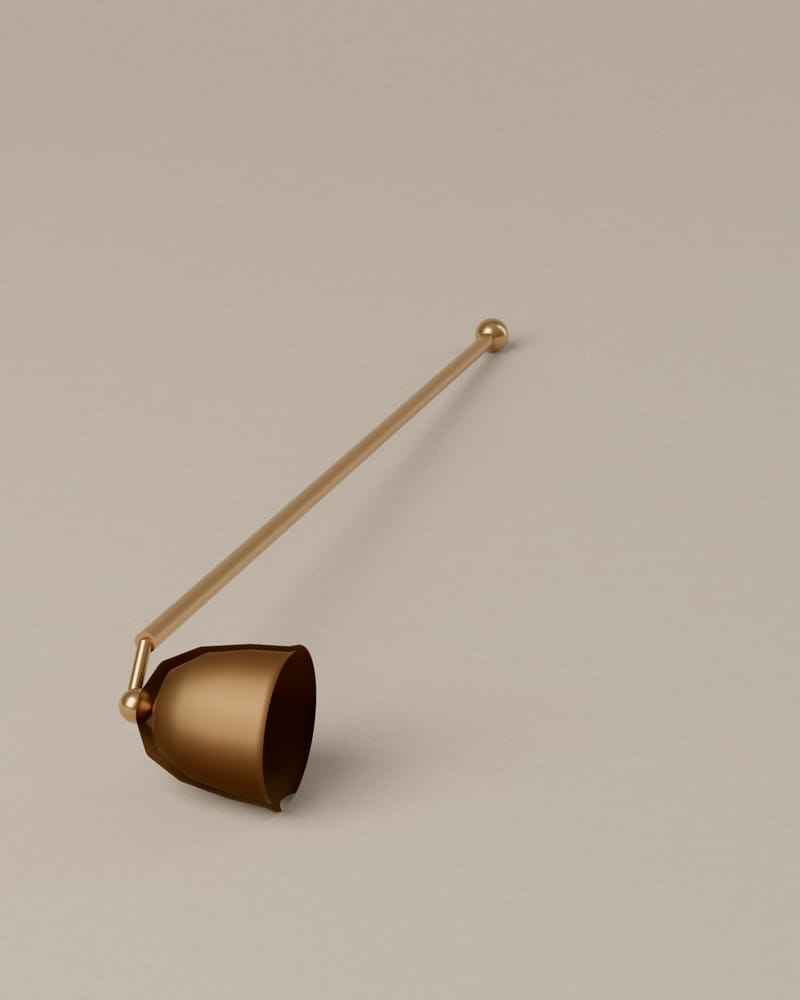
Blowing a candle out sends a curl of smoke across the room, and for the next few minutes that is all you can smell. It can also spatter wax up the glaze and push the wick off-centre. A snuffer takes the air away instead:
- Lower the bell over the flame without touching the wax.
- Hold it there for two or three seconds.
- Lift it straight up.
That is also the moment to straighten the wick. Ours is solid unlacquered brass, 24 cm long, and it darkens with handling.
The three-wick candle
Our 900 g candles are 14.8 cm across and burn for about 100 hours on three wicks. The three flames make one pool together, so they need each other.
- Trim all three to the same length, about 5 mm (¼ in). Uneven wicks give uneven flames and a lopsided pool.
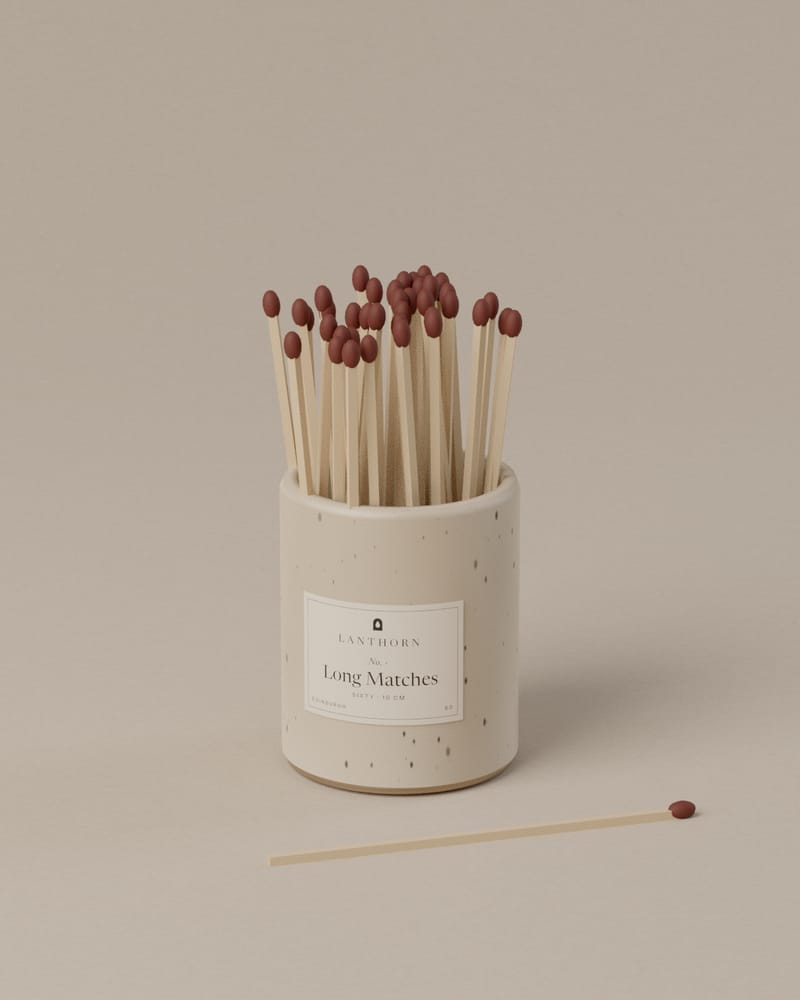
- Light all three, every time. One flame can’t reach the edge of a vessel that wide. A 10 cm long match burns for about 20 seconds, long enough to light all three.
- Give the first burn about 3 hours, until the pool reaches the edge. Still no more than 4 hours at a time.
- Snuff the wick nearest you first, so you never reach across a live flame. Keep sleeves and hair back.
- Centre each wick after snuffing, keeping the three evenly spaced.
- If one wick drowns, put all three out, let the wax set, trim, and light all three next time. If the same wick keeps drowning, tell us.
When to stop
Stop burning for good when about 1 cm (½ in) of wax remains. Everything else is in the care guide, and the Lamplighter’s Box holds a candle, the trimmer, the snuffer and a jar of matches.
— The Lanthorn workshop