The pouring room, Chandler’s Close
The atelier
Behind the shop is a long, narrow room with two melting tanks, a pouring bench and racks for curing. Everything we sell is made in it, forty-eight candles at a time.
- Batch
- 48 candles per pour
- Cure
- 14 days before sale
- Testing
- 12 four-hour burns per wick size
- Kiln
- 1,240 °C stoneware firing

Seven steps, the same every time
- 01
Blend the wax
British rapeseed wax and Perthshire beeswax are weighed out 70/30 and melted together to 80 °C. The beeswax gives a harder surface and a longer, steadier burn; the rapeseed carries the scent.
- 02
Add the fragrance
At 82 °C the fragrance goes in, at 8.5–10% of the wax weight depending on the candle, and is stirred for two full minutes so it binds evenly.
- 03
Set the wicks
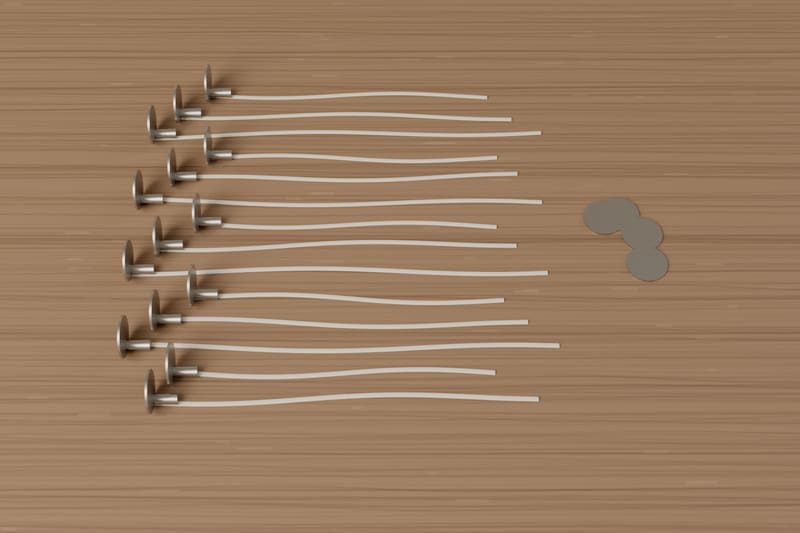
Each flat-braided cotton wick is fixed to the base of its vessel with a steel sustainer tab and held upright by a wooden bar across the rim. The three-wick candle has its wicks set in a triangle.
- 04
Pour
At 68 °C we pour, forty-eight vessels to a batch, in two passes: most of the wax first, then a thin top-up once it has shrunk, so the surface sets flat.
- 05
Cure for fourteen days
Scent keeps developing in the wax for about two weeks. Every batch rests on the racks for fourteen days before it’s labelled.
- 06
Burn-test the batch
One candle from every batch burns in the testing room in four-hour sessions, and we log the melt pool, the flame height and any soot. If it fails, the batch doesn’t ship.
- 07
Label and pack by hand
Labels are letterpress-printed on uncoated cotton paper in Edinburgh. Candles are packed in recycled-pulp inserts with paper tape. There’s no plastic anywhere in the box.
Materials
- Wax
- 70% British rapeseed wax, 30% Perthshire beeswax. Undyed. The natural ivory colour varies a little from batch to batch.
- Wick
- Flat-braided unbleached cotton with a steel sustainer tab. Three sizes: one for 220 g, one for 400 g, and a smaller size used three at a time in the 900 g vessel.
- Vessel
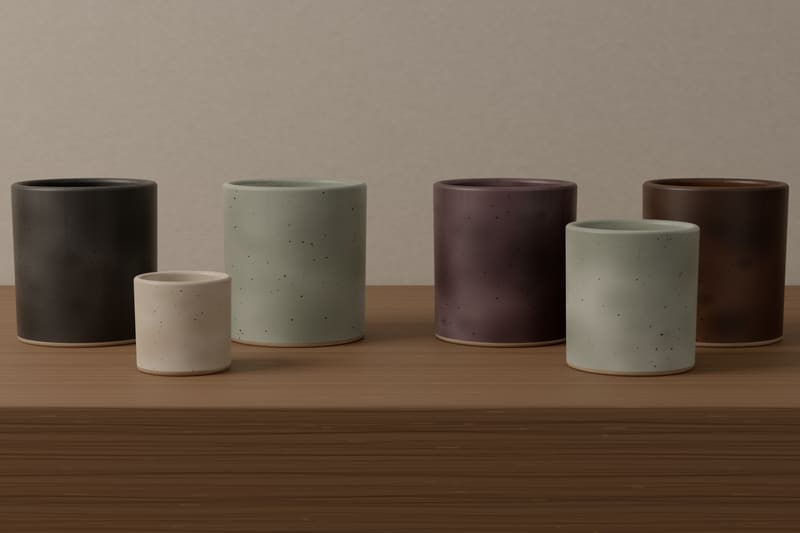
- Slip-cast stoneware from Stoke-on-Trent, fired to 1,240 °C. Glazed inside and out except for the raw foot ring, in slate, haar, heather and peat.
- Fragrance
- Composed with an independent perfumer in London from a mix of essential oils, absolutes and aroma materials. Compliant with the IFRA 51st Amendment standards for candles.
- Burn time
- About 50 hours for 220 g, 80 hours for 400 g and 100 hours for the 900 g three-wick, measured in four-hour burns to 1 cm of wax remaining.
Made here, sold online.
The workshop is where we pour, cure and pack, so it isn’t open to visitors. Everything it makes is in the shop, and posted from here.